


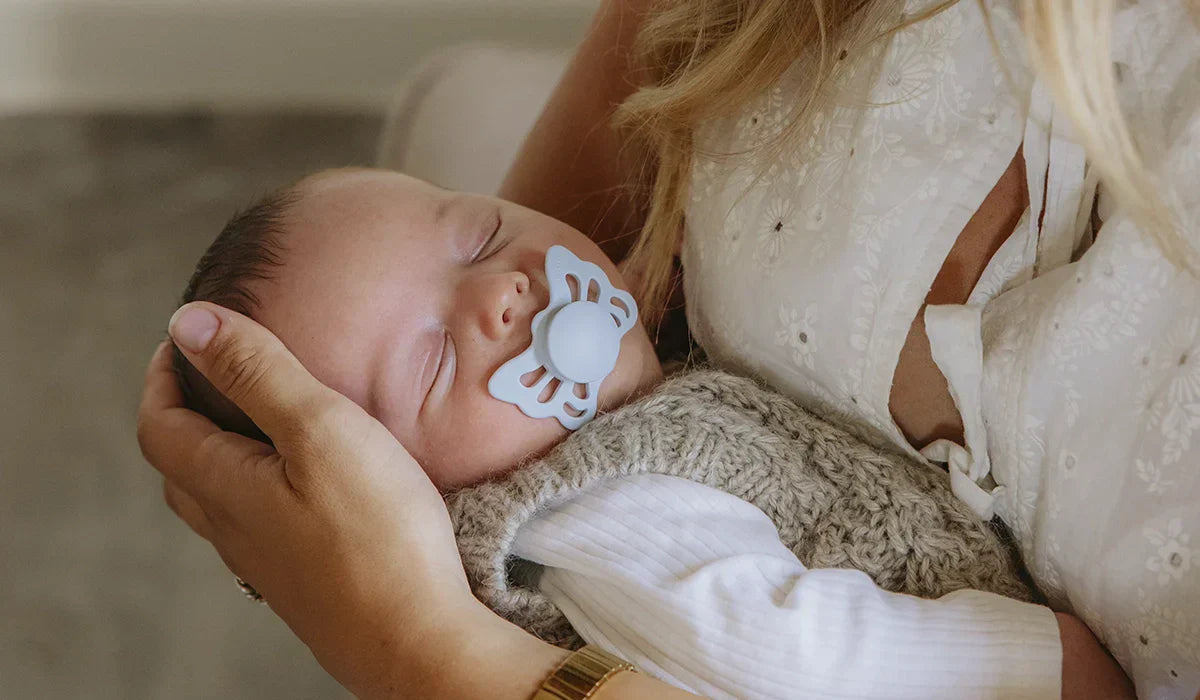
Teach your child to pacify with these tips
Teaching your child to pacify can contribute significantly to his/her safety and well-being. However, not all babies take to pacifiers immediately… In this blog post, we will share some effective tips that are useful when teaching your child to take a pacifier.
Read also: How to choose the right pacifier for your child!
- Lots of patience: Your child is experiencing the world for the first time, and a pacifier can seem unsafe/unknown. Remember to be patient and persistent in the process of teaching your child to take a pacifier.
- Timing is important: It is crucial to choose the right time when teaching your child to take a pacifier. Instead of offering it in emergency situations, it is instead a better idea to offer it when your baby is calm and content. This approach increases the child's curiosity and willingness to explore something new.
- Offer a pacifier after breastfeeding: Avoid offering the pacifier when your baby is hungry. Instead, offer it after breastfeeding, when your child is full. This increases the likelihood that he/she sees the pacifier as a source of comfort rather than an alternative to eating.
- Dip the pacifier in breast milk/breast milk formula: If your baby seems hesitant, try dipping the pacifier in breast milk or formula. This familiar taste can make your child want to investigate the pacifier and eventually accept it.
- Imitation of breastfeeding: For babies who prefer the breast, you can try to "mimic" breastfeeding by quickly switching to the pacifier after breastfeeding. This method can surprise your baby, making it more likely that he/she will take the pacifier without hesitation.
- Try different pacifiers: Babies have preferences when it comes to pacifiers. If your baby rejects a particular pacifier, don't give up. Try different shapes, sizes and materials until you find the pacifier that suits your child's preferences. See our wide selection of pacifiers here.
- Try reverse psychology: A gentle tug on the pacifier after your baby has taken it into the mouth can trigger a natural resistance reaction. This reverse psychology can encourage your child to continue sucking on the pacifier.
Teaching your child to pacify requires a mixture of patience, creativity and adaptability. By incorporating the above tips, you increase the likelihood that your child will take the pacifier. Remember that every baby is unique and the process of introduction to the pacifier is individual - so maintain patience and optimism. Good luck!
Read also: How to choose the right pacifier for your child!


