


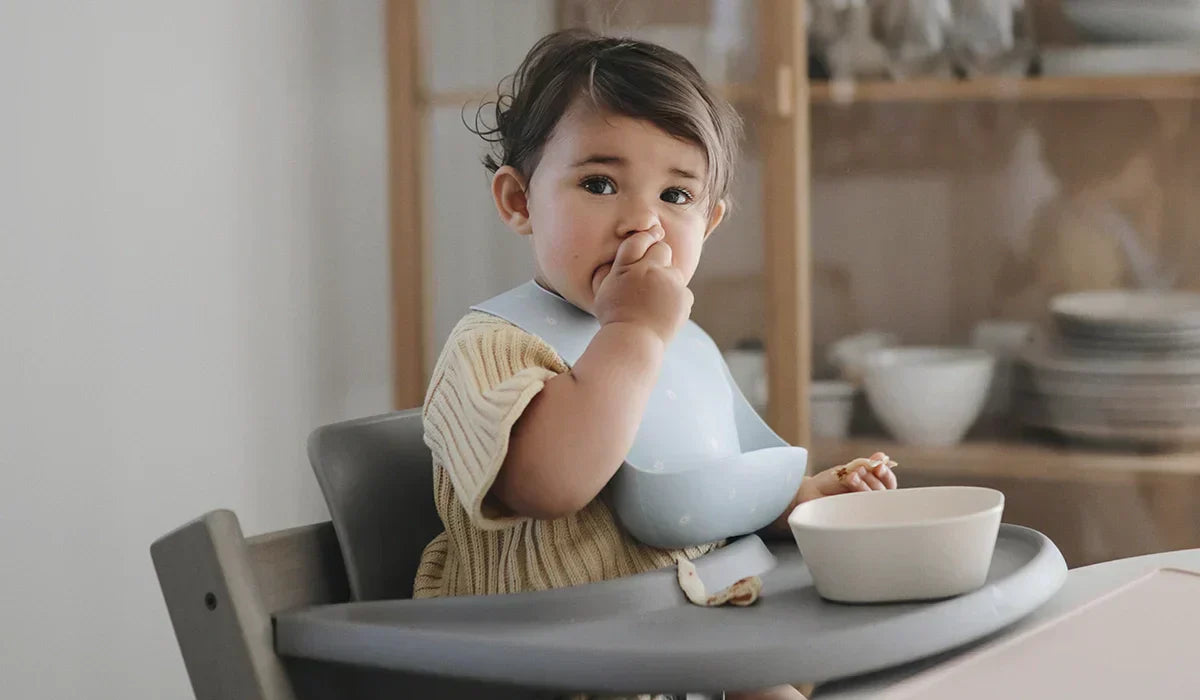
From porridge to finger food: the transition to independent meals
Going from cut mouthfuls and soft porridge to independent eating with finger foods is a big milestone for your baby. This transition not only marks a development in motor skills, but also an important stage in your baby's independence and desire to explore the world of food. But how do you make this journey both fun and successful? Here you will get the best tips for the transition - and recommendations for the equipment that can help you well on your way.
Let baby experiment
The transition to finger foods is about letting your baby explore food with their hands. It can be sticky, messy and a bit chaotic - but it's also a great learning process. Babies learn by touching, squeezing and tasting, so give them food in different textures and shapes – from soft steamed vegetable sticks to small pieces of bread or fruit.
Safety first
When introducing finger foods, it is important to choose foods that are easy to chew and difficult to get stuck in the throat. Always remember to keep an eye on your baby during the meal – and be prepared for unexpected (and fun) experiments to happen along the way.
The right equipment
To make the transition to independent meals easier, having the right equipment is a big help. Here are some must-haves for mealtime:
Plates & bowls with suction cups
Avoid flying plates by choosing plates with suction cups that stay firmly on the table. They are perfect for babies who love to experiment - and who think that anything can be used as a Frisbee! With us you will find both classic, non-divided non-slip plate , one divided non-slip plate , which is ideal for keeping food separate, as well as a matching one non-slip bowl – all designed to make the meal a little less chaotic and a lot more cozy.
Soft silicone spoons
Although finger food is the focus, your baby will still need a spoon for e.g. yoghurt or porridge. Silicone spoons are soft against the gums, easy to grip - and almost impossible to use as a catapult.
Bibs with collector
Mess is an inevitable part of mealtime. A bib with a collection pocket catches most of the food that would otherwise end up on the floor - and makes cleaning up much easier.
Placemats
A non-slip placemat protects the table and collects leftover food. Think of it as the mealtime "protection zone" - it takes the hits for you!
Splash Mat
A splash mat protects the floor under the high chair and can be easily wiped off or washed in the machine. It is made of water-resistant polyester and is also brilliant as a base for creative projects such as drawing or painting.
Patience is the key
Learning to eat on your own takes time and many attempts. Let your baby take it at their own pace and avoid pushing them if they are not ready. The most important thing is that mealtime becomes a positive experience - and that vegetable mash in your hair is just part of the charm.
Make small portions
Serve small portions to avoid waste and to give baby a manageable experience. You can always offer more food afterwards - and it will be much easier to clean up.
Make mealtime a game
Use colorful crockery and present the food in a fun way. Cut fruit into funny shapes or make a little face out of vegetables – this stimulates the baby's curiosity and appetite.
The transition from porridge to finger food is an important and fun phase in your baby's development. With the right equipment, a good deal of patience and lots of humour, mealtime quickly becomes a pleasant and educational experience for the whole family.


