


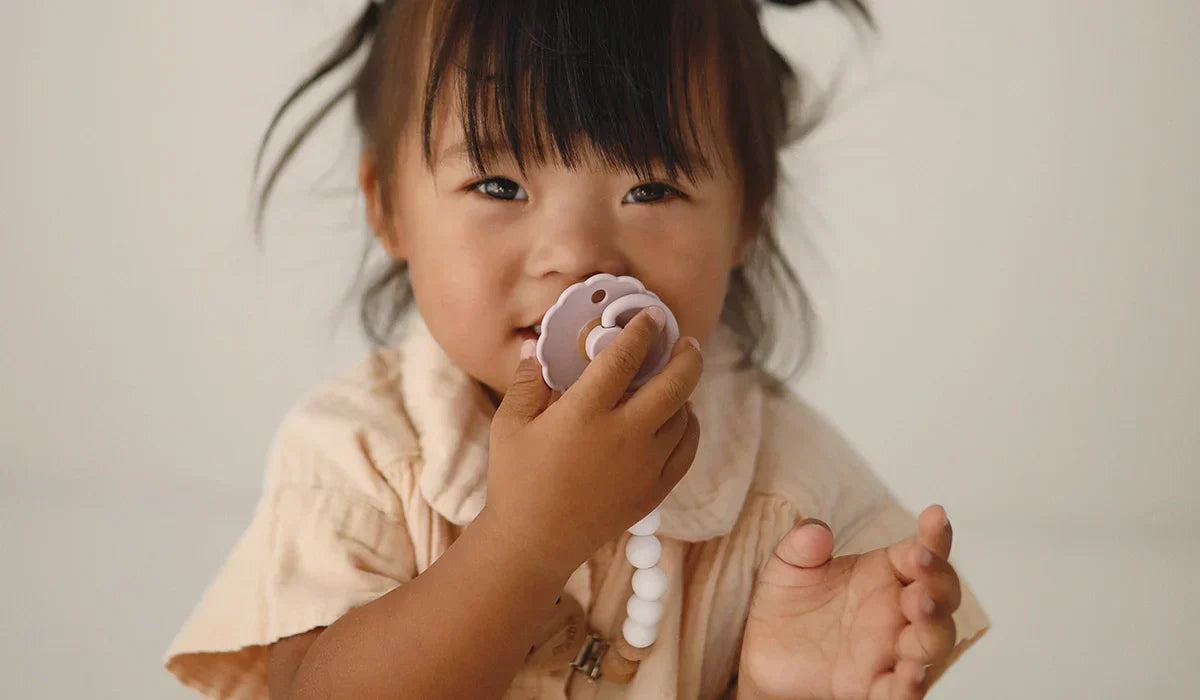
What do you do if your child bites the pacifier?
If you start to see bite marks on the pacifier's nipple, we recommend that you start weaning your child off the pacifier soon. Pacifiers are designed to be sucked on - not chewed on. When the child uses his teeth to bite, the risk of the pacifier breaking and thus no longer being safe to use increases.
Always check the pacifier for wear
When your child starts teething, it is important to check the pacifier daily. Gently pull the teat part and look for signs of wear. If you see cracks, holes or bite marks, the pacifier must be discarded immediately.
Read also: How often should I change my child's pacifier?
Teething rings as an alternative
When the first teeth erupt, many children want to put everything in their mouths. It itches and can hurt the gums when the teeth are on their way. If your child bites through the pacifier, a teether can be a good alternative. A teether is more robust and can relieve itching and discomfort in the gums.
Minimize the use of pacifiers
As soon as you notice bite marks on the pacifier, you should limit its use. Only give the pacifier when the child needs to calm down or sleep. If the child continues to use a pacifier after the age of 4, it can lead to a position of the teeth called pacifier bite. This type of tooth damage typically occurs when the permanent teeth begin to emerge around 4–6 years of age.
To avoid dental problems, we recommend stopping using pacifiers completely around the age of 3. Before you start weaning, you can consider switching from a silicone pacifier to a latex pacifier – latex is more elastic and harder for the child to bite through.
Remember
No pacifier is intended to be bitten on. Therefore, always look out for signs of wear and replace the pacifier regularly to ensure your child's safety and security.


